- Healthbeat
- Posts
- Measles and other consequences of a leaderless CDC
Measles and other consequences of a leaderless CDC
Vaccine policy is mired in confusion, states are losing public health funding, and measles is spreading as the Trump administration struggles to find a new CDC director.

Dr. Jay K. Varma, Healthbeat
March 31, 2026 • Estimated reading time: 10 minutes
Hello and welcome to Healthbeat's weekly report on stories shaping public health in the United States.
I am Dr. Jay K. Varma, a physician, epidemiologist, and public health expert currently serving as chief medical officer at Fedcap, a national nonprofit focused on economic mobility and well-being for vulnerable communities. Views expressed here are my own.
This week, I’m focused on what happens when we have no one leading public health in the United States. The Centers for Disease Control and Prevention has been effectively leaderless since President Donald Trump took office again, with vaccine policy mired in legal confusion and states fighting to keep funds they were promised.
Leaderless at CDC, and no easy fix in sight
The CDC still has no permanent director, and news outlets are reporting that the administration is struggling to find a suitable candidate.
The Trump administration's only Senate-confirmed CDC director, Susan Monarez, lasted less than a month before she was fired by Health and Human Services Secretary Robert F. Kennedy Jr. for refusing to support vaccine policy changes in August 2025.
She was subsequently replaced with political operatives until, on February 18, 2026, the administration announced that health economist Jay Bhattacharya, who is already the Senate-confirmed director of the National Institutes of Health, would serve as acting CDC director.
This unusual and, frankly, absurd situation is time-limited by law, but there are bureaucratic tricks that could allow the White House to extend this situation almost indefinitely.
According to multiple reports, the White House has been considering at least three candidates — former Kentucky Gov. Ernie Fletcher, Mississippi state health officer Daniel Edney, and Johns Hopkins cardiologist Joseph Marine — but is struggling to settle on a nominee. Why? Politicians use a tactic known as triangulation when they need to make policy between competing and opposing factions. But are there any individuals in America with sufficient health qualifications who can triangulate between the groups most closely invested in the CDC director appointment?
First there is Kennedy's Make America Healthy Again base, which views the CDC as “corrupt” and wants the agency to withdraw most, if not all, routine childhood vaccine recommendations.
Second, there is the Senate committee that has to approve the nominee and has disparate views on how much reform is actually needed at the CDC.
And finally, there is the health community — professional societies, leading academic voices, and patient advocates — which desperately wants a return to the cautious administrative and scientific processes that made the CDC the most well-respected public health agency in the world.
The absence of steady, qualified leadership has torn the agency apart. The New York Times recently published an oral history of the CDC under the Trump administration drawn from interviews with 43 current and former employees.
The remarkably poignant, sad story echoes everything I’ve heard from my former friends and colleagues: political appointees issuing orders without attributing the decision to any one leader or title, scientists told to communicate only verbally on sensitive topics to avoid any digital trail of deliberations, career staff taking phone calls outside out of fear that spyware on their computers is recording them.
The CDC and its parent agency HHS have long been considered a great place for federal employees to work, having ranked in the top five best federal agencies for workforce since 2016, according to the Federal Viewpoint Survey.
This year, the administration refused to conduct that study, and an outside group (the Partnership for Public Service) stepped in to replicate it. They found that HHS now scores 20.4 out of 100, among the lowest of any large federal agency. Fewer than 3% of HHS employees report that Kennedy's political team generates high levels of motivation.
On Wednesday, Bhattacharya held an all-hands meeting with CDC staff. Friends and colleagues of mine appreciated that he made statements that others in HHS have not, such as acknowledging the value of CDC employees, recognizing the challenges (a shooting!) they have had to endure, and pledging to address some workforce uncertainty, such as remote working agreements.
They were not won over, however, by his inability to articulate what trust in public health and the CDC means and how he and this administration are working to strengthen it.
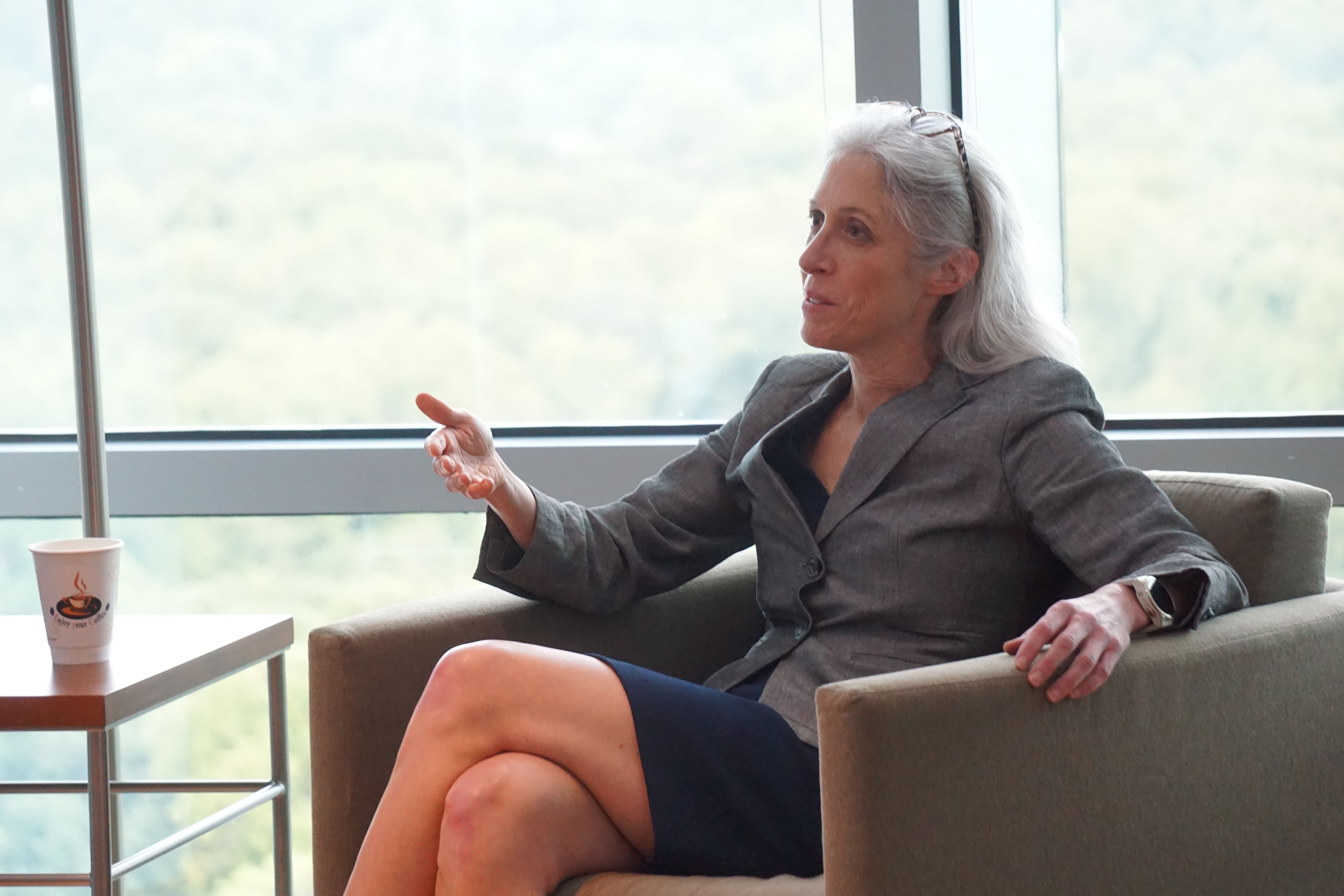
Susan Monarez, the last Senate-confirmed CDC director, lasted less than a month before she was fired by HHS Secretary Robert F. Kennedy Jr. for refusing to support vaccine policy changes. (Rebecca Grapevine / Healthbeat)
What does a new CDC director actually need to do?
If the administration nominates a candidate, I think there are three critical issues the nominee should be judged by.
First, what is their vision for the nation’s public health agency, and how will they restore purpose and direction to an agency that has been defamed and degraded?
A complex science and policy organization like the CDC cannot function without clear and steady leadership. Career scientists need to understand how to prioritize their time, who has authority over what decisions, and how much they can communicate with the public.
Second, how will they bring order and scientific rigor back to vaccine policy?
CDC vaccine policy has become an issue for the courts. In a lawsuit filed by the American Academy of Pediatrics, a federal judge in Boston temporarily blocked Kennedy's January overhaul of the childhood vaccine schedule and stayed the appointments of 13 members of the Advisory Committee on Immunization Practices, ruling that Kennedy likely violated the Administrative Procedure Act. The judge noted that only six of the ACIP's 15 panelists appeared to have any meaningful experience in vaccines, despite a legal mandate that they do.
In response to the ruling, the CDC canceled the ACIP meetings that had been scheduled for March. The former ACIP vice chair, Robert Malone, announced he is done with the committee entirely, citing, without any hint of self-reflection, "drama.”
The United States now has no functioning vaccine advisory committee, and states, clinicians, and parents have no clarity about what the nationally recommended vaccine schedule is. The AAP lawsuit that produced the March 16 ruling could reach the Supreme Court before the year is out.
A new CDC director needs to take a principled stand on returning to the evidence-based decision-making processes that have historically governed the CDC’s vaccine recommendations.
Third, will the new CDC director commit to restoring funding to state and local health departments?
This is where the damage from the past year is most direct and most immediate. State and local governments are directly responsible, under the Constitution, for protecting the health of the American people.
The Trump administration has sought to terminate CDC grants to states run by Democratic governors, including California, Colorado, Illinois, and Minnesota. In Illinois alone, the cuts would eliminate more than $100 million supporting local health departments, HIV programs, and chronic disease surveillance.
While a federal judge temporarily blocked the terminations, it is unclear what their long-term fate is and whether states are able to hire staff, purchase equipment, or do activities with these funds until the decision is resolved. A new CDC director must commit to restoring federal funding to all states, regardless of their partisan voting patterns.
Anyone nominated to be CDC director must be asked, clearly and publicly, what they intend to do about each of those problems. The Senate confirmation process exists for exactly this purpose.
As of March 27, the measles case count is at 1,654, over two-thirds of last year's total in less than three months, and outbreaks around the country continue unabated. The resurgence of once-eliminated diseases is the unfortunate but predictable consequence of a year without functioning CDC leadership.
ICYMI
Here’s a recap of the latest reporting from Healthbeat:
I discuss the risk of infectious disease spread at ICE facilities and in hospitals on Atlanta’s 11Alive TV. Watch here.
Measles: No new cases in S.C. for a week, but CDC outbreak models warn about underreporting | State health officials worry spring break travel will spread cases
Health coverage: How federal funding cuts will cost 500,000 New Yorkers their health insurance
Medical shipping: How the Iran war is disrupting the world’s medicine supplies
🌏 Sign up here for the Global Health Checkup, a weekly report that explains how global health matters to all.
State public health: How four states revamped their public health systems
Until next week,
Jay
Looking for your next read? Check out these other great newsletters.
|

|

|

|

Reply