- Healthbeat
- Posts
- How ICE and hospitals are failing at infection control
How ICE and hospitals are failing at infection control
As the size of ICE detention facilities grows, so do the risks of Legionella bacteria and measles, mumps, and tuberculosis outbreaks. Hospitals are also falling short of infectious disease prevention.

Dr. Jay K. Varma, Healthbeat
March 17, 2026 • Estimated reading time: 5 minutes
Hello and welcome to Healthbeat's weekly report on stories shaping public health in the United States.
I am Dr. Jay K. Varma, a physician, epidemiologist, and public health expert currently serving as chief medical officer at Fedcap, a national nonprofit focused on economic mobility and well-being for vulnerable communities. Views expressed here are my own.
In the past week, I have been alarmed by the number of infectious disease outbreaks occurring at Immigration and Customs Enforcement detention facilities while the Trump administration is planning to expand their size even more. It is not just ICE that is failing in infection control: A new survey reveals hospitals are under-investing as well.
And we have interesting new data on a topic I covered a few weeks ago — longevity, or the science of living longer — and a further reminder that medications and tests are less important than who and what we surround ourselves with.
Infectious diseases spreading at ICE detention facilities
Elected officials in Maryland recently sent a letter to the U.S. General Services Administration raising alarm about Legionella bacteria detected in the water systems of the George H. Fallon Federal Building in downtown Baltimore.
Legionella is a waterborne bacteria that causes a severe pneumonia (known as Legionnaires' disease) when contaminated water vapor is inhaled. It thrives in poorly maintained plumbing and ventilation systems and can be fatal, particularly for older adults and immunocompromised individuals, as happened in a large 2025 New York City Legionnaires’ disease outbreak.
The Fallon building houses an ICE regional office and detention holding rooms. According to the letter from two U.S. senators and seven House members, testing in November found Legionella bacteria in the building's water system and contamination persists despite hyperchlorination treatment.
The lawmakers report that detainees are being held in overcrowded conditions for far longer than temporary holding rooms are designed to accommodate and that insufficient action is being taken to prevent an outbreak.
Unfortunately, Legionella is only the latest dangerous respiratory pathogen found at ICE facilities nationwide.
In early March, ICE confirmed that there have been, at least, 14 cases of measles at its largest detention facility: Camp East Montana, a tent city located on the Fort Bliss Army base in El Paso, Texas. An additional 112 individuals have been either quarantined or isolated. Four additional cases have also been diagnosed in the surrounding El Paso community.
Tuberculosis cases have been reported at ICE facilities in Alaska, California, Arizona, Colorado, Washington, and New York over the past year. Just like measles, TB spreads through the air, and outbreaks occur in precisely the conditions ICE facilities create: crowding, poor ventilation, and incomplete screening and testing.
Federal standards require that people be screened for TB within 12 hours of intake, but government investigators have found that is not always happening. Detainees with positive screening are often moved to solitary confinement, but these rooms lack the air filtration and ventilation needed to keep measles virus or TB bacteria from spreading outside a single room.
None of this should be a surprise. A 2021 study in JAMA documented more than 2,600 cases of influenza, chickenpox, and mumps between 2017 and 2020 at 22 ICE facilities, including one with a varicella (chickenpox) outbreak that ran for 33 consecutive months.
Another study published last October analyzed data about 20 ICE facilities from 2019 to 2023 and found 2,035 influenza cases, 486 hepatitis A cases, and 252 mumps cases across 128 separate outbreaks. The authors' recommendations were fairly basic: Reduce crowding, vaccinate detainees and staff against preventable infections, and improve infection control, such as air filtration and ventilation.
As ICE has dramatically expanded detention from roughly 39,000 detainees at the end of the Biden administration to more than 75,000 today, the conditions for outbreaks have worsened proportionally. Crowding intensifies transmission risk, and interfacility transfers seed infections across the system.
The administration is now planning to build even larger facilities. ICE's "Detention Reengineering Initiative" calls for consolidating hundreds of facilities into approximately 34 regional mega-centers. One is planned for Social Circle, Georgia‚ a small city that would see its population nearly triple. The facility is projected to hold between 7,500 and 10,000 detainees for stays of roughly 60 days.
As the size of these facilities grows, the possibility of further illness and death from infectious diseases grows dramatically. Will ICE learn the lessons from the past few years about preventing measles, TB, and other respiratory infections in their facilities? I’m not, ahem, holding my breath.
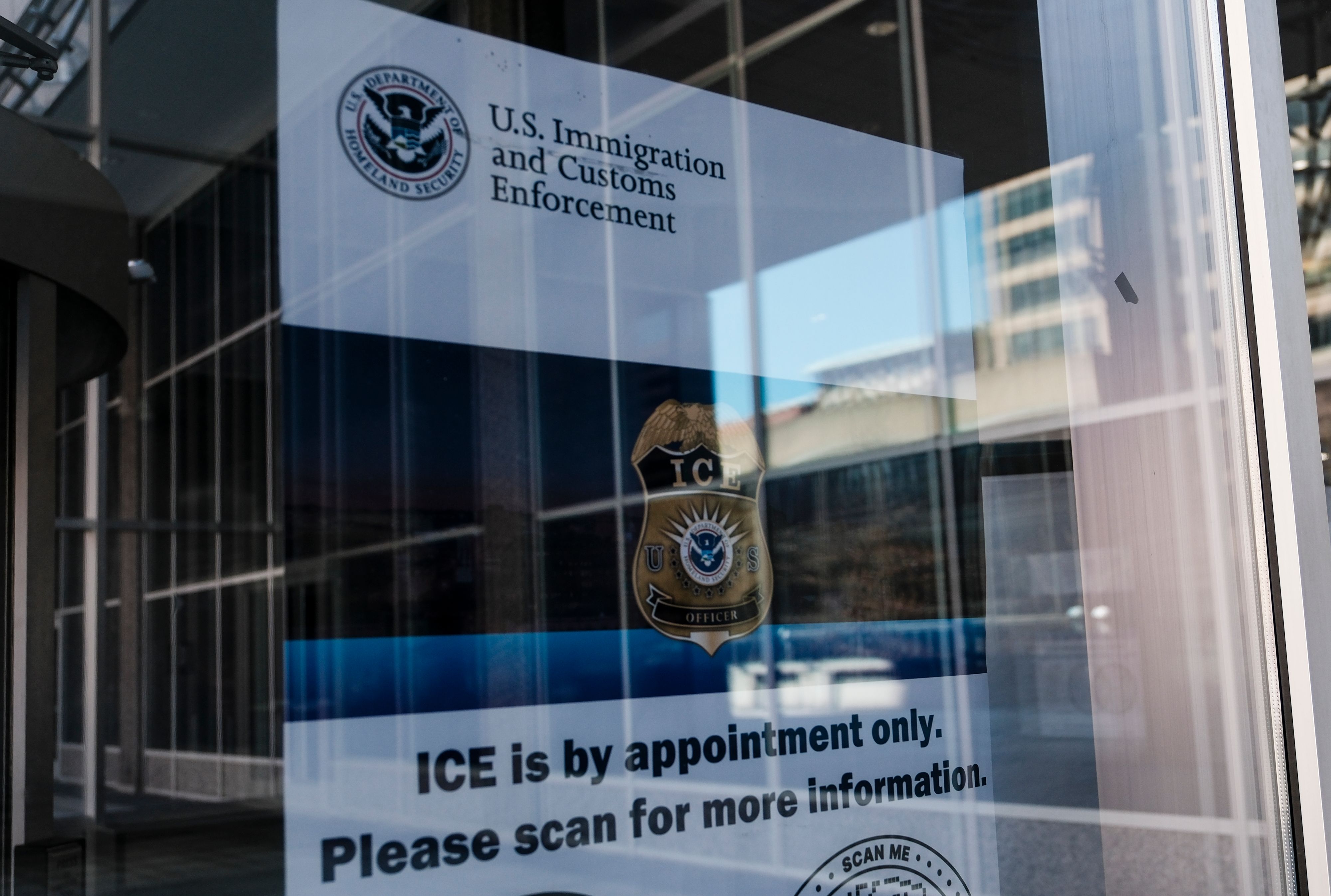
The George H. Fallon Federal Building in Baltimore, Maryland. (The Washington Post / Getty Images)
Infection control also lagging in hospitals
Any indoor setting that brings a large number of people together in close proximity can lead to an infectious disease outbreak. Hospitals are particularly risky, because they bring two populations close together: people who have a high likelihood of already having an infectious disease and people who are highly susceptible, due to immune suppression or other issues, of becoming severely ill if they are exposed to an infectious disease. This is why federal and state regulations require hospitals to invest in infection control personnel, systems, and equipment.
Unfortunately, a new survey published in February by Infection Control Today reveals how badly hospitals continue to fall short. Infection preventionists are specialized professionals who track and stop pathogen transmission inside health care facilities. The survey found they are overwhelmed with problems to address, while simultaneously lacking the resources and authority to address those problems. According to one respondent, "Without investment, [hospital leaders] will only see the consequences when the patient impacts are already significant, and the costs are high."
As with ICE facilities, the solutions are not complicated: increased staffing, increased authority and stature of infection prevention staff within leadership, and modernized technology to improve detection and response. Hospital-acquired infections cost the health care system billions annually, many times more than what prevention costs. Infection prevention in facilities, as in the broader community, needs to be framed as an investment, rather than a cost.
Your frenemies may be killing you
A few weeks back, I wrote about challenges with the field of longevity, but I wish I had been able to highlight a study that was just published in the Proceedings of the National Academy of Sciences. We all know about toxic relationships: a colleague who undermines you, or a family member who keeps score and makes your life worse. But is it possible they are also making you die sooner?
That is the intriguing hypothesis that a research team at New York University set out to test. Using a representative sample of more than 2,300 adults in Indiana, they studied what they called "hasslers": people in your close social network who "occasionally or often" caused problems or made their life difficult in some way. Nearly 60% of people had at least one.
To measure aging, the researchers used DNA methylation, tiny chemical changes in the genome that accumulate predictably over a lifetime and may be read as a biological clock. Each additional hassler was associated with approximately 1.5% faster biological aging per year, the equivalent of roughly nine months of added biological age. People with more hasslers also had worse self-rated health, more anxiety and depression, and greater rates of cardiovascular disease and diabetes.
One finding I found particularly striking was that the most damaging relationships were not the purely hostile ones, but ambivalent ones, i.e., people who provide both support and stress. It’s easy to identify and exit entirely negative relationships. The ambivalent ones keep you close, keep you invested, and keep the stress going.
While I have some doubts about whether the biochemical changes measured in this study truly measure aging, I am inclined to believe these results, because health — whether it’s preventing infections or living longer — depends far less on medications and tests than on factors outside our body: air, water, food, and the people in our lives.
ICYMI
Here’s a recap of the latest reporting from Healthbeat:
9/11 health agency: Lawmakers seek meeting with RFK Jr. over staff shortages, delays at World Trade Center Health Program
Measles: S.C. wants to avoid a spring break measles outbreak surge, enlists school help during closures
GLP-1 drugs: How new weight-loss drugs may offer hope for curbing addiction
📰 Sign up here to get Healthbeat’s Global Health Checkup in your inbox a day early.
Until next week,
Jay
Looking for your next read? Check out these other great newsletters.
|

|

|

|

Reply