- Healthbeat
- Posts
- After a large measles outbreak in South Carolina, a warning sign appears in Georgia
After a large measles outbreak in South Carolina, a warning sign appears in Georgia
Wastewater data show the virus in metro Atlanta for the first time since fall, hinting at possible undetected spread.

Rebecca Grapevine, Healthbeat
April 09, 2026 • Estimated reading time: 9 minutes
Hi, Atlanta!
Neighboring South Carolina has seen nearly 1,000 measles cases in a large outbreak that started in October, raising fears that Georgia could see a spike in cases, especially around spring break travel. Georgia has had two cases this year. The first was in a child who was too young for a vaccine who had a history of international travel. The second, reported in early March, was in an unvaccinated resident of Bryan County, near Savannah.
The origins of the Bryan County case are unknown. It’s not clear whether the person was exposed to measles in Georgia through undetected spread or during travel to or from Washington, D.C., the state Department of Public Health said at the time.
Now measles has been detected — on March 29 and 31 — at the Clayton Water Reclamation Center in Atlanta, according to data from WastewaterSCAN, a joint project of Stanford and Emory universities.
That means there was likely at least one person with measles infection in the area. However, the data do not show whether the person lives there or was just nearby, DPH spokesperson Nancy Nydam Shirek said.
It’s the first time measles has been detected in wastewater since last fall, when measles spread from an unvaccinated Georgia State University student to three other people who were unvaccinated or had an unknown vaccination status. That outbreak led to a large contact tracing effort that required at least 200 extra hours of work by public health employees.
DPH sent an April 2 alert to health departments, clinics, and hospitals to remind clinicians to consider measles in people with relevant symptoms, Nydam Shirek said. Initial symptoms include fever (often as high as 104-105) accompanied by cough, runny nose, and/or conjunctivitis about 7-14 days after first exposure. That may be followed by tiny white spots (called Koplik spots) inside the mouth, followed by a characteristic red rash that typically begins on the face.
“Overall, wastewater can heighten our awareness, but it is not meant to capture a single case, let alone a small number, which remains a concern even as measles cases rise,” Nydam Shirek said.
Still, wastewater can provide an early warning sign for a number of infectious diseases.
For example, last August, measles was detected in wastewater in Colorado. Within the next four days, measles was confirmed in two unvaccinated residents living near that water treatment plant. The early warning sign helped public health officials notify the public and prepare for a possible outbreak, according to a January report in the CDC’s Morbidity and Mortality Weekly Report.
One important caveat: Georgia has only eight wastewater detection sites, mostly in the metro Atlanta area, meaning that the data do not give a complete picture of what is going on in the state. For example, wastewater monitoring did not pick up the Bryan County case because there are no monitoring sites in that part of the state.
And an important reminder: Two doses of the measles-mumps-rubella vaccine are 97% effective in preventing this highly contagious virus.
ICYMI
Here’s a recap of the latest reporting from Healthbeat:
Legislature: Georgia lawmakers pass health workforce bills but leave gaps on community health workers
Smoking: How smoking fell to lowest level ever and other public health wins
Global health: Iran war threatens systems that keep drinking water flowing in the Gulf
🌏 Sign up here for the Global Health Checkup, a weekly report that explains how global health matters to all.
The Grapevine 🍇
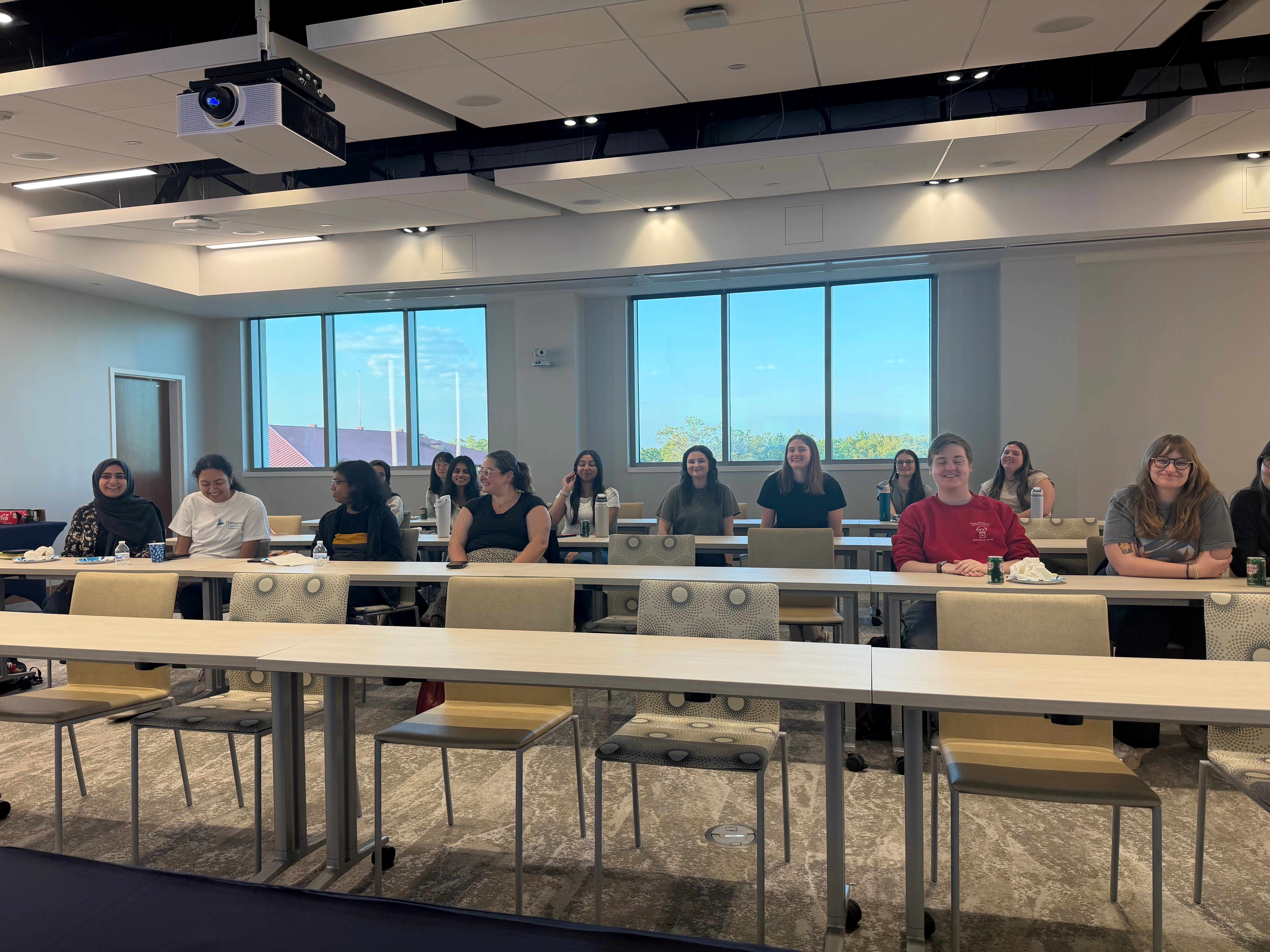
Science Communication for All, a student group at Rollins School of Public Health at Emory University. (Rebecca Grapevine / Healthbeat)
I had the great pleasure of speaking to members of Science Communication for All, a student group at Rollins School of Public Health at Emory University. I was joined by Jordan Rose, the co-founder and co-executive director of Science ATL, and Kelly Jordan, Rollins’ editorial director.
While some of the students in the club are primarily interested in science communication careers, others want to find better ways to communicate about research and public health topics. Some of the questions: How do we handle reporting on health disinformation without giving it additional credence? How can researchers prioritize communicating with a general audience about their work? All inspiring and thought-provoking!
What I’m hearing from readers:
“Excellent reporting”
Hear from Healthbeat on other platforms:
Fox 5: I discuss the health impact of the latest session of the Georgia legislature. Watch here.
Public Health on the Move
Fulton County is opening a new health and human services facility at 4700 North Point Pkwy. in Alpharetta. Public health services will be available there by the end of the month. The former call center will also house offices for other social services to create a “one stop shop.”
The Southern Alliance for Public Health Leadership was one of five organizations honored with a Catalyst Award by the Common Health Coalition to help expand its work across the South.
Upcoming Events
April 11-15: Black Maternal Health Week. A variety of events focused on resilience and education, including a performance of “Mama Stories." Details and registration here.
Monday, noon to 1 p.m.: “Measles in Georgia: Prevention, Policy, and Public Health Response,” a webinar sponsored by ARCHI. Details here.
Wednesday, noon to 1 p.m.: “Deployed: A Physician on the Front Lines of Public Health,” a talk by Dr. Kevin De Cock, founding director of the Centers for Disease Control and Prevention Center for Global Health, sponsored by the Infectious Ideas Dinner Club. Register here.
April 16, 6 p.m.: Screening of documentary “Me Period” with accompanying distribution of menstrual products. Register here.
April 21-24: Annual Epidemic Intelligence Service conference. Virtual; free, and open to the public. Details here.
April 28, 10 a.m. to 2 p.m.: The State of Everything - Volume 2, sponsored by Neighborhood Nexus. Details here.
April 29, 9 a.m. to noon: Georgia Public Health Association virtual annual conference. Details here.
What Do You Know?
Test your knowledge of public health topics. Today’s question:
Legislators recently approved a budget that includes how much for the Georgia Department of Public Health for next fiscal year? |
Tell Me More
What questions do you have about public health in Atlanta? You can reach me at [email protected], post a comment, or reply to this email.
In health,
Rebecca
Looking for your next read? Check out these other great newsletters.
|

|

|

|

Reply